
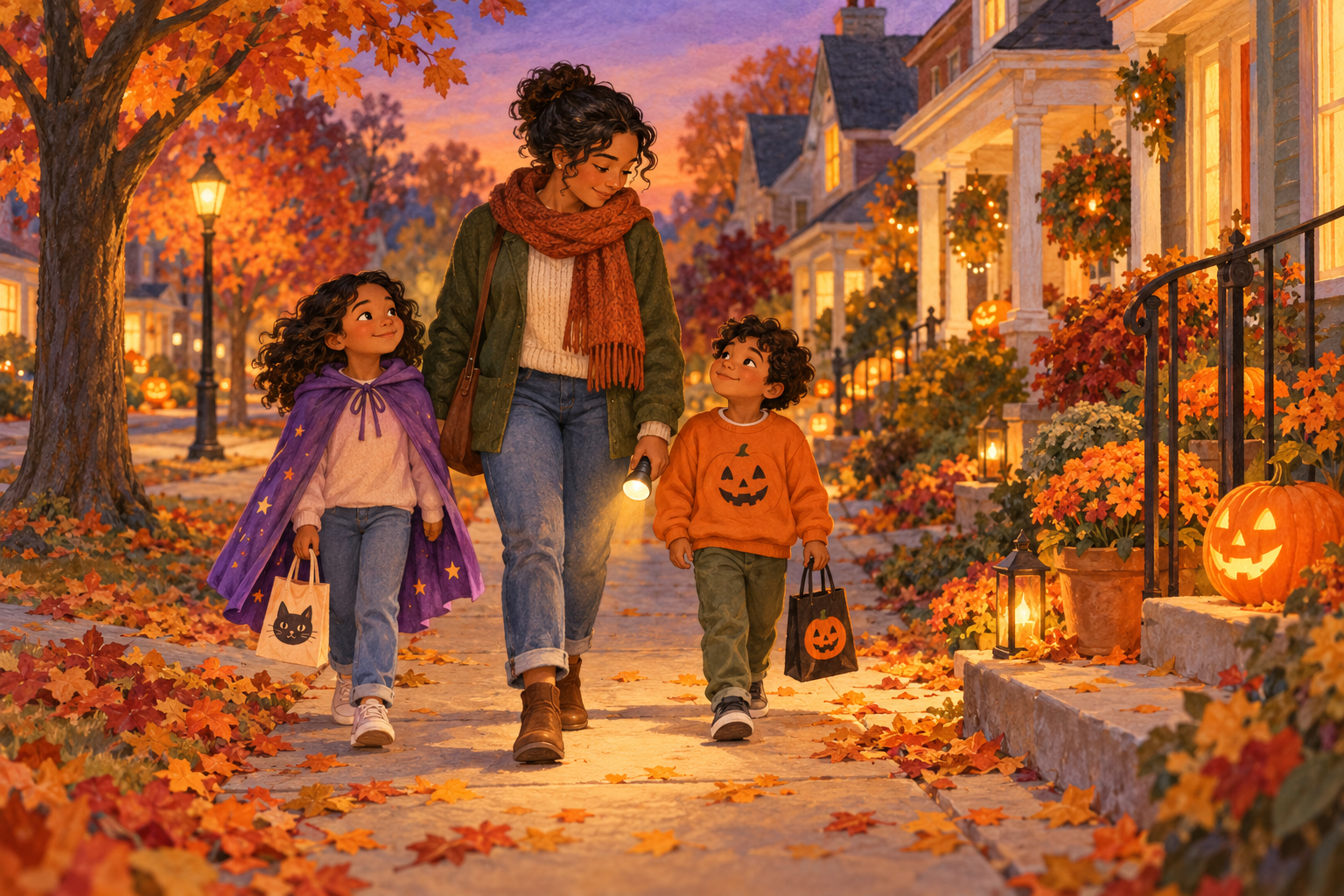
Alright, everybody, put your costumes on! Or your favorite comfy clothes. Those work, too.
Fall is here, which means Halloween is near. Halloween is a time to enjoy sweet treats and dress up as our favorite characters. It is also the time when we find costumes, plan activities, and figure out our trick-or-treating routes.
Which can mean one thing: a lot of changes all at once.
Halloween can bring changes in routines, unfamiliar clothing, new people and places, large crowds, unexpected sounds, decorations, lights, and new social expectations.
That was a lot, huh?
Halloween doesn’t need to be perfect. As parents, we try our best to make every experience for our children a great one. Sometimes, the best thing we can do is focus less on making everything perfect and more on making sure our children feel supported, safe, and comfortable.
Here are some ways to prepare your child for Halloween and help them participate in the festivities in a way that works for them.
Let’s Start With Preparation!
Preparing for upcoming changes can start with something as simple as talking about them.
Talk about what your family plans to do on Halloween:
- “We will walk around the neighborhood.”
- “We will knock on some doors.”
- “People will be wearing costumes.”
- “People may offer us candy.”
- “We can take a break or go home.”
You can also look at pictures of decorations, costumes, and places you plan to visit, such as a trunk-or-treat, mall, or community event.
Read books about Halloween. Practice trick-or-treating at home and make it into a silly game, if your child enjoys it. Watch a short video together, previewing it first for anything your child might find frightening. You could even visit an event location ahead of time or walk around your neighborhood to look at decorations together.
A simple visual schedule can show what you have planned:
Get dressed → Get your Halloween bag → Trick-or-treat → Take a break → Go home
Use pictures, words, or objects that are meaningful to your child. Keep the plan flexible, and let them know if it changes.
Preparation is about helping your child know what to expect. They don’t need to practice until they can follow every Halloween tradition.
What Will My Child Wear?
Your child may want an elaborate costume, a favorite character shirt, or their everyday clothes. All of those are okay!
If your child is interested in a costume, let them explore it before Halloween. They might want to touch it, hold it up, or try on one piece at a time. Notice whether anything feels itchy, tight, hot, or uncomfortable.
You can make adjustments together. Wear familiar clothes underneath, skip an uncomfortable accessory, or bring a change of clothes. A costume that felt fine at home may feel different after walking around.
There is no requirement to wear a costume to enjoy Halloween. Let your child’s preferences help guide the choice.

Halloween Can Be a Sensory Experience
Halloween brings new sights, sounds, smells, tastes, and textures. Some children love these experiences, some find them overwhelming, and some feel a little of both.
Give your child time and space to explore at their own pace. They may want to watch a moving decoration from across the street, pass a noisy house, or skip a crowded event altogether.
Consider bringing familiar supports, such as headphones your child already uses, a comfort item, or a preferred snack. You can also choose a shorter route or an event at a less crowded time.
Try using declarative language to share information without turning every observation into a question or instruction:
- “That decoration makes a loud noise.”
- “There are a lot of people near that house.”
- “There’s a quieter spot over here.”
Then give your child time to respond in their own way. Clear, direct instructions still matter when you need to communicate an immediate safety direction, such as “Stop at the curb.”
Want to learn more? Say Less, Notice More
How Can My Child Communicate?
Excitement, unfamiliar people, and a busy environment may make communication harder than usual. Make room for all the ways your child communicates, including speech, gestures, sign language, pictures, and augmentative and alternative communication (AAC).
Keep their usual communication tools available and easy to access. Halloween vocabulary can be fun, but messages such as “help,” “break,” “no,” “all done,” and “go home” matter, too.
Your child does not need to say “trick or treat,” make eye contact, or say “thank you” on cue to participate. You can model a phrase or speak on their behalf without requiring them to repeat it.
Pay attention to what they are communicating through their actions, too. Moving away, handing you their bag, or pushing a costume piece aside may tell you something worth responding to.
A portable communication board can be an additional option alongside your child’s usual communication system.
What If My Child Becomes Overwhelmed?
Take a break! You don’t have to wait until your child is very upset to offer one.
Notice their individual signs that they may need a pause. They might cover their ears, become quieter, move away, or ask to be carried. Check in, offer a quieter place, and give them time without adding lots of questions.
You might say:
- “We can sit here for a while.”
- “You can take your costume off.”
- “We can go home.”
After a break, your child may want to continue—or they may be finished. Either choice is okay.
Visiting two houses and heading home can be a complete Halloween outing. The number of doors you knock on doesn’t determine how meaningful the experience was.

A Little Planning for Safety
Choose a costume that allows your child to see and move easily, with hems that won’t trip them. Use reflective tape and a flashlight to help your family stay visible after dark.
Stay with young children, use sidewalks where available, and cross streets together at crosswalks. Choose familiar support, such as holding hands or using an appropriate stroller, based on your child’s needs.
If several adults are coming, agree on who is supervising each child and make any handoff clear.
Before treats are eaten, check wrappers and ingredient labels, consider allergies, and remove items that pose a choking risk for your child.
What If My Child Doesn’t Want to Trick-or-Treat?
Sometimes children don’t want to participate in holiday traditions. That can bring up feelings for parents, especially if you were excited to share an experience with them. It’s okay to feel disappointed and still respect your child’s preferences.
When I was growing up, we didn’t live in a neighborhood. I can only remember trick-or-treating once, when I was in high school and went with a friend. All the other years, my parents bought us candy, and we stayed home and watched movies.
That was our Halloween tradition.
Your family can create traditions together, too. You might decorate pumpkins, have a Halloween movie night, hide treats around the house, or hand out candy if your child enjoys greeting visitors.
You can also have an ordinary evening. There’s no need to fill it with activities just because the calendar says Halloween.
There’s No Right Way to Do Halloween
Your child’s Halloween may look different from another child’s, and it may look different from last year. That’s okay.
Make a plan, leave room to change it, and notice what your child enjoys.
The goal is to share an experience that feels good for your child and your family—whether that means a neighborhood adventure or a cozy night at home.
Written by Kaylyn and Gina